
Our Story
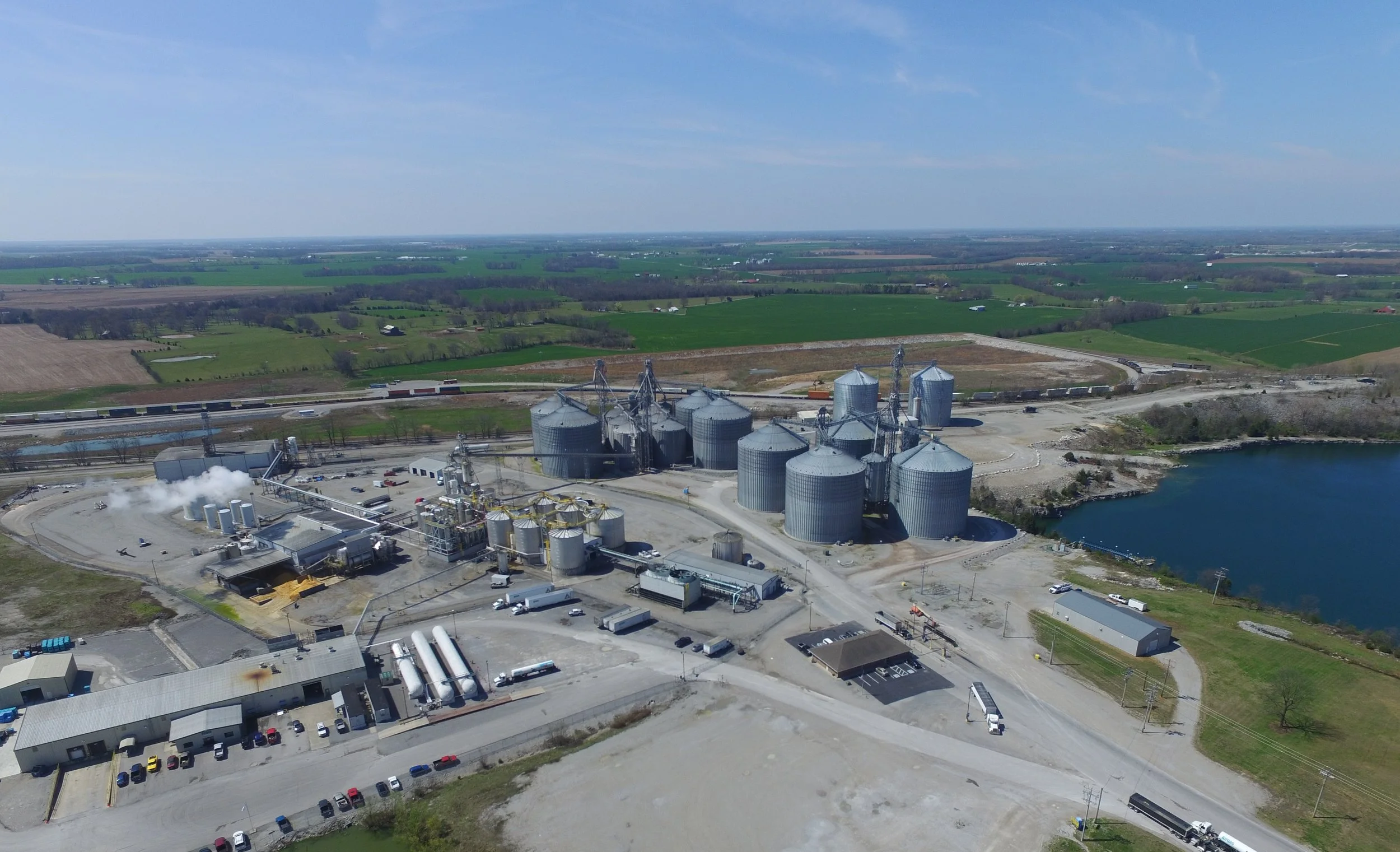
Commonwealth Agri-Energy was founded with a clear mission: to create a reliable market for locally grown corn while producing clean, renewable fuel.
Since opening, the plant has evolved through continued investment in technology, process efficiency, and environmental performance. What began as a commitment to farmers has grown into a modern ethanol production facility serving both domestic and international markets.
Through operational upgrades and strategic improvements, Commonwealth has strengthened its role as a dependable partner for growers, fuel blenders, livestock producers, and manufacturers of household and industrial products.
Commonwealth Agri-Energy, LLC is proudly owned by the 3400 members of the Hopkinsville Elevator CO-OP.
Our Leadership
Chairman: David Brame
Vice-Chairman: Philip Garnett
Secretary: Wayne Hunt
Members:
John Young
Seldon Dixon, Jr.
Laura Knoth
Randy Riley
John Martin
Jeff Davis
Our leadership team brings decades of experience across agriculture, renewable fuels, operations, and grain marketing.
Our Commitment
-
Safety is our highest priority. We maintain rigorous operational standards, continuous employee training, and proactive safety programs to protect our workforce and community.
-
Ethanol is a renewable fuel that reduces lifecycle greenhouse gas emissions compared to traditional petroleum fuels. We continuously invest in efficiency improvements, emissions reductions, and resource conservation to improve our environmental performance.
-
Commonwealth Agri-Energy is proud to support local organizations, schools, and community initiatives. Our plant creates jobs, generates tax revenue, and contributes to the long-term vitality of our region.
-
Commonwealth invests in modern ethanol production technology to maximize yield and minimize resource use. Continuous process improvements enhance:
• Energy efficiency
• Water reuse and conservation
• Yield optimization
• Equipment reliabilityOur commitment to operational excellence ensures we remain competitive in the renewable fuels market.
Quality

Quality and food safety are central to how Commonwealth Agri-Energy operates. Our customers rely on us for consistent, high-quality products, and we are committed to maintaining the systems and standards necessary to deliver on that expectation. Commonwealth operates under a comprehensive Quality Management System designed to ensure product integrity, operational consistency, and continuous improvement. The facility is SQF Certified (Safe Quality Food), a globally recognized food safety and quality certification program that verifies rigorous standards for food safety management, documented processes, and operational controls.
In addition to SQF certification, Commonwealth maintains Kosher certification and compliance with the Food Safety Modernization Act (FSMA) for both Human Food and Animal Food. Our Quality Management System is supported by employee training, regular internal audits, ongoing review of food safety plans, measurable quality objectives, and documented procedures maintained in our internal Quality Manual. These systems help ensure consistent production practices while supporting our commitment to quality, safety, and reliability for our customers.
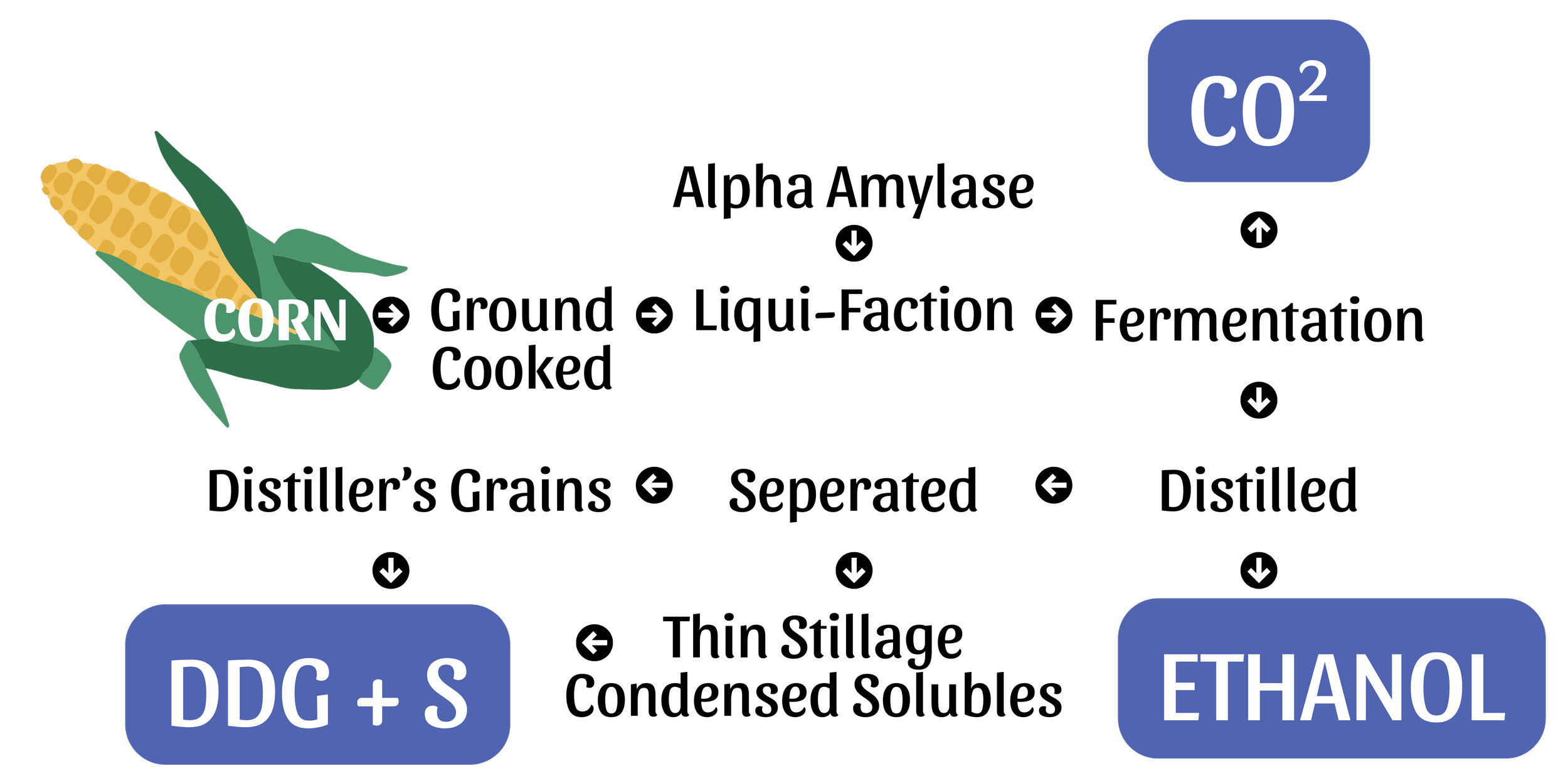
Dry Milling Process

Ethanol is America's Homegrown Way to Fuel Forward
-
Ethanol is an alcohol made from corn that has been converted into simple sugars and then fermented and distilled. Because ethanol is a renewable fuel produced from corn, increased ethanol usage will boost Kentucky farm income while, at the same time, reducing U.S. reliance on imported oil and reducing carbon monoxide emissions.
-
Ethanol is a renewable fuel produced from corn that supports agriculture, strengthens rural economies, and contributes to cleaner transportation fuels.
As a value-added product of corn, ethanol creates additional demand for local grain, helping improve profitability for farmers while supporting jobs and economic activity across the agricultural supply chain.
Ethanol is blended into gasoline as an oxygenated octane enhancer that helps reduce harmful vehicle emissions. By improving combustion efficiency, ethanol lowers carbon monoxide (CO) emissions and contributes to cleaner air.
In addition to environmental benefits, ethanol provides consumers with a high-octane fuel option that is both cost-effective and domestically produced.
From One Bushel of Corn
The ethanol production process efficiently uses every part of the corn kernel. On average, one bushel of corn produces:
• 2.8 gallons of renewable ethanol fuel
• 17 pounds of distillers grains used for livestock feed
• 17 pounds of carbon dioxide used for industrial applicationsThis efficient process supports renewable energy production while also supplying feed, food, and industrial markets.
-
1 bushel of corn = 2.8 gallons of ethanol, 17 pounds of livestock feed (distillers grains) and 18 pounds of carbon dioxide.
Ethanol has an octane rating of 113 and contains 77,000 BTU’s.
E10 (10% ethanol, 90% gasoline) is safe for use in any gasoline-powered engine, including motorcycles and lawnmowers.
13 billion gallons of ethanol produced in 2010 reduced America’s need for imported oil for gasoline refining by 445 million barrels.
In 2010, the production of 13 billion gallons of ethanol helped support more than 400,000 jobs in all sectors of the economy.
All of the Big Three auto makers have recommended the use of gasoline containing oxygenates, such as ethanol, in their warranty statements since the 1993 model year. The reason?…..the lower and less harmful emissions produced by ethanol.
Flex-fuel Vehicles (FFV’s) can use E85, a blend of 85% ethanol, 15% gasoline, unleaded or any combination of the two. There are more than 8.5 million FFV’s on America’s roads today.
40% of the cars in Brazil run on 100% ethanol; the rest run on 22% ethanol and 78% gasoline.